

Fireworks can cause serious burns, eye trauma, hearing damage, hand injuries, and permanent scarring within seconds. Princenthal, May & Wilson, LLC helps injured Georgians determine whether careless firework use, unsafe property conditions, an improperly managed display, or a defective product contributed to their harm. A legal claim may be available when another person or business failed to use reasonable care and that failure caused an injury. Since fireworks debris and video evidence can disappear quickly, prompt medical treatment and careful documentation are often critical.
Fireworks are common at Independence Day celebrations, New Year gatherings, festivals, neighborhood parties, and private events throughout Georgia. Princenthal, May & Wilson, LLC understands that a sudden fireworks injury can leave a person facing medical bills, missed work, severe pain, and uncertainty about who may be responsible.




What Are the Most Common Firework Injuries? 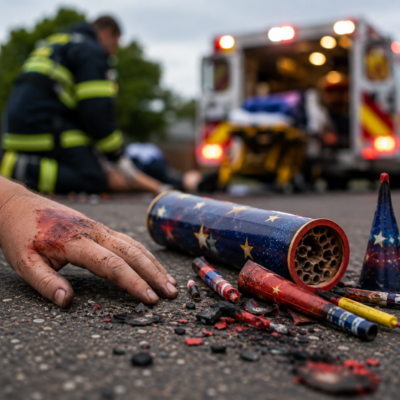
Firework injuries range from painful burns to permanent, life-changing trauma. The U.S. Consumer Product Safety Commission reported at least 15 fireworks-related deaths and an estimated 13,000 emergency department-treated injuries during 2025. Hands and fingers accounted for 35 percent of the injured body parts, while burns made up 38 percent of emergency room-treated injuries.
Common firework injuries include:
- First-degree, second-degree, and third-degree burns
• Hand and finger cuts or puncture wounds
• Broken bones and crush injuries
• Nerve, tendon, and ligament damage
• Partial or complete loss of a finger
• Eye injuries and permanent vision loss
• Facial wounds caused by sparks or flying debris
• Hearing loss, ringing in the ears, or ruptured eardrums
• Traumatic brain injuries caused by blast force or projectiles
• Smoke inhalation and respiratory irritation
• Scarring and disfigurement
• Emotional trauma after a severe accident
Children and bystanders can suffer serious harm even when they never touch a firework. A rocket may change direction, a mortar tube may fall over, or a device may explode earlier than expected. Sparklers can also cause severe burns. The CPSC warns that sparklers can burn at temperatures above 2,000 degrees Fahrenheit.
Attorney At Law Attorney At Law Attorney At Law
Adam Princenthal

David May

Matthew Wilson
When Can a Firework Injury Lead to a Legal Claim?
A firework injury does not automatically create a legal claim. The injured person generally must show that another party owed a duty of care, failed to meet that duty, and caused an injury that resulted in measurable losses.
A claim may arise when:
- Someone points, throws, or launches fireworks toward another person
• A person uses fireworks while impaired by alcohol or drugs
• An adult allows a child to handle dangerous fireworks without proper supervision
• A host permits fireworks to be used in a crowded or unsafe area
• A commercial operator fails to establish a sufficient safety zone
• A property owner ignores known fire, explosion, or crowd-control hazards
• A firework malfunctions because of a manufacturing or design defect
• A seller distributes damaged, recalled, altered, or improperly labeled fireworks
Consumer fireworks are legal in Georgia, but lawful ownership does not excuse careless use. Georgia also regulates fireworks manufacturing, sales, transportation, storage, and public exhibitions. Public fireworks displays may require permits, licensed operators, and compliance with safety rules.
Negligent Use of Fireworks
Many fireworks injury claims are based on negligence. Negligence occurs when a person fails to use the level of care that a reasonably careful person would use under similar circumstances.
For example, a guest at a backyard gathering may light an aerial firework from an unstable container. The container tips over and causes the firework to shoot toward nearby guests. If another person suffers burns or an eye injury, the person who launched the device may be responsible because the firework was used in an unsafe manner.
Other examples of potentially negligent conduct include:
- Relighting a device that failed to ignite
• Holding a firework that should be placed on the ground
• Launching fireworks near vehicles, homes, trees, or power lines
• Failing to keep spectators away from the ignition area
• Ignoring wind conditions that could redirect sparks or projectiles
• Allowing children to use fireworks without close supervision
Learn more about negligence-based injury claims at:
https://www.princemay.com/georgia-personal-injury-lawyers/
Liability of a Homeowner, Business, or Event Host
A homeowner, landlord, business owner, event organizer, or venue operator may be liable when unsafe property conditions or poor event management contribute to a fireworks injury.
Potential premises liability issues include:
- Allowing fireworks in a confined courtyard, parking lot, or crowded yard
• Failing to separate spectators from the launch zone
• Leaving combustible materials near the firing area
• Permitting fireworks use after observing dangerous conduct
• Providing defective launch tubes or unstable equipment
• Failing to maintain safe exits during a public celebration
• Ignoring applicable restrictions or permit requirements
Georgia property owners and occupiers may owe duties to lawful visitors. Liability often depends on who controlled the property, who knew about the danger, whether the hazard could have been corrected, and whether reasonable warnings were provided.
More information about these claims is available at:
https://www.princemay.com/georgia-premises-liability-lawyers/
After a car accident, I contacted David May at the Lagrange office. He, and his staff, helped me with medical advice and follow up doctors visits, along with dealing with my insurance and the insurance of the woman that hit me. I have been very pleased with the service I received from David May and the Lagrange staff. They are warm and open, always there to help with advice and answer questions.” - Debau I highly recommend Adam Princenthal .I was looking for someone with years of experience in personal injury.They needed to be knowledgeable, transparent and honest.I wanted to know I was dealing directly with the lawyer I hired.Adam Princenthal could answer all the difficult questions and phone calls were returned.Adam got the settlement I was looking for in a timely manner." - Nancy K. I am glad that I was referred to Princenthal & May. Matthew met with me and gained my trust with the case. I was never left in the dark on any matters, My phone calls were either answered or returned quickly. The office staff are very friendly as well. My case was settled, with both Matthew and Adam present. Both are very professional in their work.. They work for you !!!" - Jacque Minor
Professional Fireworks Displays
Professional fireworks displays may involve several parties, including pyrotechnic operators, event planners, property owners, equipment suppliers, contractors, security companies, sponsors, and government agencies.
An investigation may examine:
- Whether the operator held the required license or permit
• Whether the firing area met applicable safety requirements
• Whether spectators were placed too close to the display
• Whether wind and weather conditions were monitored
• Whether fireworks and launch equipment were inspected
• Whether crowd-control procedures were followed
• Whether a misfire was handled correctly
• Whether emergency personnel were available
A claim involving a city, county, school district, or another government entity may require written notice before a lawsuit can proceed. Government notice periods can be much shorter than the ordinary deadline for a personal injury lawsuit, so prompt legal review may be necessary.
Defective Fireworks and Product Liability
Some accidents occur even when a consumer follows the instructions. A firework may explode prematurely, discharge from the side, tip because of a design defect, or contain an unstable fuse.
A product liability claim may involve:
- A design defect that makes the firework unreasonably dangerous
• A manufacturing error affecting one device or an entire batch
• Missing or inadequate safety instructions
• Incorrect labeling about proper use
• Failure to warn consumers about a known hazard
• Sale of a recalled or illegally altered product
Potential defendants may include the manufacturer, importer, distributor, wholesaler, or retailer.
The injured person should preserve the firework, packaging, instructions, receipt, and unused items from the same package. The product should not be tested, repaired, returned, or discarded before a qualified professional can inspect it.
See the firm’s full list of services at:
https://www.princemay.com/practice-areas/
Hiring a Personal Injury Attorney How Long Will a Personal Injury Case Take?Related Videos
What Evidence Should You Preserve?
Fireworks debris is often cleaned up soon after an accident. Guests leave, videos are deleted, and damaged property may be repaired. Preserving evidence early can help establish how the injury occurred.
Useful evidence may include:
- Photographs of the firework, packaging, launch area, and injuries
• Mobile phone videos or security camera footage
• Names and contact information for witnesses
• Medical records and photographs documenting recovery
• Police, fire department, or emergency medical reports
• Event permits and professional operator records
• Receipts showing where the fireworks were purchased
• Social media posts showing who controlled or ignited the device
• Damaged clothing, protective equipment, launch tubes, and containers
Seek immediate medical care for burns, eye pain, hearing changes, numbness, severe swelling, breathing problems, or suspected blast injuries. Some injuries may worsen without prompt treatment.
Avoid posting detailed statements about the accident on social media. An insurance company may review public comments, photographs, and videos when evaluating a claim.
How Georgia Comparative Fault May Affect Compensation
Georgia follows a modified comparative fault system. Compensation may be reduced according to the percentage of fault assigned to the injured person. A claimant who is 50 percent or more responsible generally cannot recover damages.
Suppose a host launches fireworks near a crowded patio, but an injured guest crossed a visible safety barrier. The host may argue that the guest contributed to the accident. The outcome may depend on witness statements, photographs, warnings, property conditions, and the conduct of everyone involved.
An injured person should avoid admitting fault or guessing about what happened before the available evidence has been reviewed.
What Damages May Be Recoverable?
Compensation in a Georgia fireworks injury claim may include:
- Emergency medical treatment
• Hospitalization and surgery
• Rehabilitation and physical therapy
• Future medical care
• Lost income
• Reduced earning capacity
• Pain and suffering
• Emotional distress
• Scarring and disfigurement
• Permanent disability
• Property damage
• Loss of enjoyment of life
The value of a claim depends on the severity of the injury, available evidence, insurance coverage, long-term medical needs, and each party’s share of fault. No particular result can be guaranteed.
How Long Do You Have to File a Claim?
Under O.C.G.A. § 9-3-33, actions for injuries to a person in Georgia generally must be filed within two years after the claim accrues.
Different deadlines or notice requirements may apply when a case involves a government entity, a minor, wrongful death, product liability, or another special circumstance. Waiting can also make a valid claim harder to prove because witnesses may become difficult to locate, surveillance recordings may be overwritten, and physical evidence may be destroyed.
Speak With a Georgia Firework Injury Attorney
A serious firework injury can affect a person’s health, employment, finances, and family life. Princenthal, May & Wilson, LLC can investigate the incident, identify potentially responsible parties, examine available insurance coverage, and explain the legal options that may apply.
To discuss a Georgia firework injury, request a free consultation at:
https://www.princemay.com/contact-us/
The firm serves clients throughout Georgia from offices in Sandy Springs and LaGrange.
This article is for informational purposes only and is not legal advice. Consult an attorney about your specific situation.