

Bicycle accidents across Georgia often rise during summer break when children, teenagers, and families spend more time outdoors riding in neighborhoods, parks, and residential streets. Determining liability after a crash depends on many factors, including driver conduct, cyclist behavior, roadway conditions, and sometimes defective equipment or negligent supervision. Georgia law allows fault to be shared among multiple parties, which makes careful investigation essential in every case.
Princenthal, May & Wilson LLC represents injured cyclists and families throughout Georgia, helping them understand responsibility after a crash and guiding them through the legal process of seeking compensation.



Bicycle Accident Risks Increase During Summer Break in Georgia 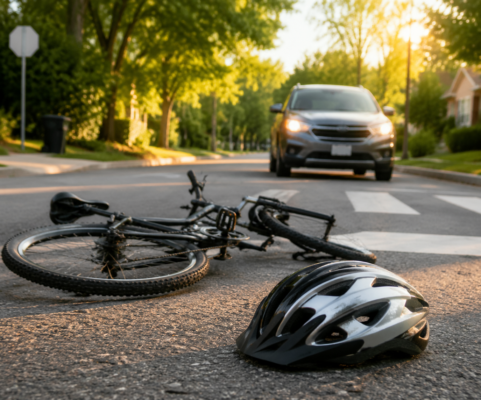
Princenthal, May & Wilson LLC regularly handles bicycle injury claims across Georgia, and one pattern is consistently clear: summer break brings a noticeable rise in bicycle-related collisions. Longer daylight hours, school breaks, and increased outdoor activity create more opportunities for interaction between bicycles, pedestrians, and motor vehicles. Residential streets become more active, neighborhood parks see heavier use, and children often ride with varying levels of experience and awareness of traffic risks.
During this period, drivers may also be less alert to cyclists because traffic patterns change. Vacation travel, construction zones, and increased congestion in recreational areas can further contribute to dangerous conditions. These combined factors make summer one of the most important times to understand how liability is determined when a bicycle crash occurs.
How Bicycle Collisions Commonly Happen
Many bicycle accidents in Georgia occur in predictable ways, often involving a combination of human error and environmental conditions. Motorists may fail to notice a cyclist when turning at intersections or exiting driveways. In residential areas, distracted driving or speeding significantly increases the risk of a collision, especially where children are present. Cyclists, on the other hand, may also contribute to risk by riding unpredictably, failing to obey traffic signals, or traveling in low-visibility conditions without proper lighting or reflective gear.
Some of the most common contributing factors include distracted driving, failure to yield, unsafe passing, dooring incidents in urban areas, and failure to maintain safe following distances. In summer months, these risks increase as more inexperienced riders share the roadway with vehicles that are not always anticipating bicycle traffic.
Attorney At Law Attorney At Law Attorney At Law
Adam Princenthal

David May
Matthew Wilson
Understanding Who Can Be Held Liable After a Bicycle Crash
Liability in Georgia bicycle accidents is rarely limited to a single party. Instead, responsibility is often divided based on each party’s actions leading up to the collision. In many cases, a motor vehicle driver bears primary responsibility due to failure to follow traffic laws or exercise reasonable care around cyclists. However, liability can extend beyond drivers depending on the circumstances.
Cyclists themselves may share responsibility if they violate traffic rules or act unpredictably in traffic conditions. In cases involving children, parents or guardians may face questions regarding supervision, particularly when younger riders are involved in busy roadways. Government entities or property owners may also be responsible if unsafe road conditions, poor signage, or inadequate infrastructure contributed to the crash. In some situations, manufacturers of bicycles or safety equipment may be held accountable if defective parts contributed to the injuries.
Georgia’s comparative fault system allows multiple parties to share responsibility. This means that even if an injured cyclist is partially at fault, recovery may still be possible as long as their share of fault does not exceed the legal threshold.
After a car accident, I contacted David May at the Lagrange office. He, and his staff, helped me with medical advice and follow up doctors visits, along with dealing with my insurance and the insurance of the woman that hit me. I have been very pleased with the service I received from David May and the Lagrange staff. They are warm and open, always there to help with advice and answer questions.” - Debau I highly recommend Adam Princenthal .I was looking for someone with years of experience in personal injury.They needed to be knowledgeable, transparent and honest.I wanted to know I was dealing directly with the lawyer I hired.Adam Princenthal could answer all the difficult questions and phone calls were returned.Adam got the settlement I was looking for in a timely manner." - Nancy K. I am glad that I was referred to Princenthal & May. Matthew met with me and gained my trust with the case. I was never left in the dark on any matters, My phone calls were either answered or returned quickly. The office staff are very friendly as well. My case was settled, with both Matthew and Adam present. Both are very professional in their work.. They work for you !!!" - Jacque Minor
Driver Responsibility in Georgia Bicycle Accidents
Motor vehicle drivers are frequently central to bicycle accident claims. Georgia law requires drivers to operate their vehicles with reasonable care and to remain aware of vulnerable road users, including cyclists. Liability may arise when a driver fails to yield at intersections, makes unsafe turns, opens a car door into a cyclist’s path, or drives while distracted.
In many summer break cases, children riding bicycles are involved, which increases the level of care required from drivers. Courts often evaluate whether a reasonable driver would have anticipated the presence of cyclists in a particular area, especially in neighborhoods, school zones, and recreational paths.
When Cyclists May Share Responsibility
Cyclists are also expected to follow traffic laws, including obeying signals, riding in the correct direction, and using appropriate lighting when riding at night. When these rules are not followed, a cyclist may share a portion of responsibility for a collision. However, shared fault does not eliminate the possibility of recovery under Georgia law. Instead, compensation may be adjusted based on each party’s percentage of responsibility.
In cases involving minors, the analysis becomes more complex, as courts often consider age, maturity, and reasonable expectations for safe behavior. These cases require careful evaluation of all contributing factors.
Hiring a Personal Injury Attorney How Long Will a Personal Injury Case Take?Related Videos
Road Conditions and Government Liability
Not all bicycle accidents involve direct driver interaction. Some occur due to unsafe or poorly maintained roadway conditions. Potholes, missing signage, faded lane markings, and construction hazards can all create dangerous conditions for cyclists. In certain circumstances, a municipality or government agency responsible for road maintenance may be held liable if it can be shown that they failed to address known hazards within a reasonable timeframe.
These cases often require detailed investigation into maintenance records, inspection schedules, and prior complaints about roadway safety.
Defective Bicycle Parts and Product Liability
Some bicycle accidents are caused or worsened by defective equipment. Brake failure, tire blowouts, or frame defects can lead to sudden loss of control. In these cases, manufacturers or distributors may bear responsibility if the defect can be traced to design flaws, manufacturing errors, or failure to warn consumers of known risks.
Product-related claims often require expert evaluation to determine whether equipment failure contributed directly to the crash or injuries.
How Evidence Shapes Liability Determination
Evidence plays a critical role in determining fault in bicycle accidents. Police reports, witness statements, surveillance footage, and medical documentation all help reconstruct what happened before, during, and after the crash. In some cases, accident reconstruction specialists are used to analyze speed, impact angles, and visibility conditions.
Prompt evidence collection is especially important during summer months when traffic conditions change frequently and physical evidence may disappear quickly due to weather, road repairs, or increased vehicle activity.
Representative Cases
Comparative Fault and Compensation in Georgia
Georgia follows a modified comparative fault system, which allows injured parties to recover compensation even if they are partially responsible for the accident. However, recovery is reduced based on the percentage of fault assigned. If a cyclist is found to be more than 50 percent responsible, recovery may be barred.
This system makes liability analysis especially important, as even small differences in fault allocation can significantly impact the outcome of a claim.
Legal Support for Bicycle Accident Claims in Georgia
Bicycle accident claims often involve multiple parties, disputed facts, and complex insurance issues. Legal representation helps ensure that evidence is preserved, liability is properly evaluated, and communication with insurance companies is handled appropriately.
Princenthal, May & Wilson LLC provides guidance to injured cyclists and families across Georgia. The firm evaluates liability, investigates crash circumstances, and assists clients in understanding their legal options after a serious bicycle collision. More information is available at https://www.princemay.com/georgia-bicycle-accident-lawyers/ and https://www.princemay.com/georgia-personal-injury-lawyers/.
Additional resources can also be found at https://www.princemay.com/contact-us/.
Speak With a Georgia Bicycle Accident Attorney
If a bicycle crash occurs during summer break, determining responsibility quickly can make a significant difference in the outcome of a claim. Legal guidance can help clarify fault, preserve critical evidence, and ensure that injured individuals understand their rights under Georgia law. Princenthal, May & Wilson LLC offers assistance to families and cyclists throughout Georgia seeking clarity after serious roadway incidents.
Disclaimer: This information is for educational purposes only and does not constitute legal advice. Consult an attorney regarding your specific situation.