
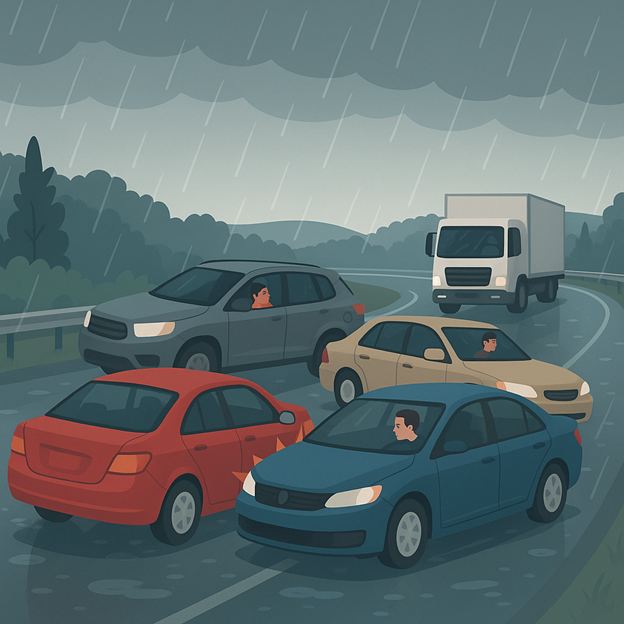
Sudden storms are part of life in Georgia. Summer afternoons can shift from bright skies to heavy rain in minutes. Those downpours leave slick roads, standing water, and low visibility across I 285, I 85, GA 400, and local routes in Sandy Springs, LaGrange, and nearby areas. When traffic is moving at highway speeds and the rain starts to fall, one mistake can cause a chain reaction. If you are hurt in a multi car crash during a storm, the big question becomes who is liable. The answer depends on how Georgia law looks at shared faults, what the evidence shows, and whether each driver adjusted to the weather.

Why Georgia Rain Leads To Multi Car Crashes 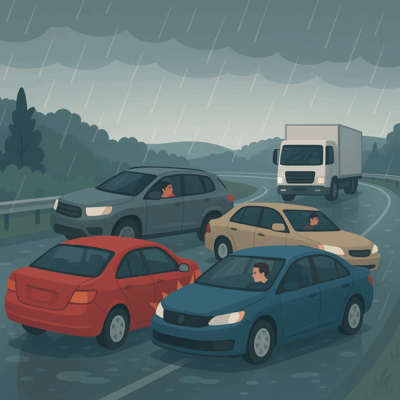
Rain changes how tires and brakes work. A thin layer of water can cause hydroplaning when the tires ride on top of the water instead of gripping the road. Stopping distances grow longer. Headlights reflect off wet pavement and spray from trucks. Drivers who tailgate in dry weather often keep the same short gap in the rain which leaves no margin when traffic slows. On busy corridors near Atlanta, any sudden brake tap can ripple through the line of cars. A driver who is distracted or traveling too fast for conditions may start a chain that involves several vehicles.
Drivers still have a duty to drive with care during storms. That includes slowing down, turning on headlights, leaving room to stop, and avoiding sudden lane changes. When someone fails to take those steps and a crash follows, that driver can be found negligent even if the rain played a role.
How Georgia Law Looks At Shared Fault
Georgia uses a modified comparative negligence rule. Multiple drivers can share blame. If you are less than fifty percent at fault, you can recover money for your losses, but your recovery is reduced by your share of fault. If an insurance company says you are fifty percent or more at fault, it may try to avoid paying. This makes fair fault allocation the central fight in many rainy season pileups.
Picture this common scene. A driver hydroplanes while speeding and spins across lanes near the Roswell Road exit. Two cars behind are following too closely and rear end each other as they try to stop. Another driver moves into the next lane without checking mirrors. Several impacts happen within seconds. In a case like this, each driver’s decisions before the crash matter. Speed, following distance, lane changes, and the use of headlights all play into liability.
Attorney At Law Attorney At Law Attorney At Law
Adam Princenthal

David May
Matthew Wilson
Evidence That Decides Liability In Rain
The right evidence can turn a disputed story into a clear narrative. A police report notes what officers saw, road conditions, and traffic law violations. Photos and video show water on the road, skid marks, debris fields, and damage patterns that reveal impact angles. Dash cameras and nearby security cameras often capture the sequence of events. Black box data from modern vehicles records speed, braking, and throttle in the seconds before impact. Witness statements fill gaps by describing which vehicle lost control first and how the chain reaction unfolded. Weather reports confirm the intensity and timing of the storm.
In storms, it becomes crucial to show whether each driver adjusted to the conditions. A photograph that shows a car with lights off in heavy rain can be persuasive. So can phone records if distraction is suspected. An attorney can coordinate preservation letters to keep video and vehicle data from being lost.
Who May Be Responsible In A Chain Reaction Crash
The first driver to lose control is often a focus, but fault can be shared. The driver who hydroplanes after speeding through standing water may carry a large share. A driver who follows too closely may also share blame for rear ending the car ahead. A driver who merges abruptly without signaling can be liable even if the road is wet. A commercial vehicle can add another layer if the company failed to maintain tires or required a schedule that encouraged unsafe speeds. City or county entities may face scrutiny if a known drainage problem creates repeated flooding, though claims against public bodies follow special rules and strict timelines.
These cases rarely turn on a single label like rain related or chain reaction. Each collision within the pileup is analyzed. In many claims, different impacts have different fault drivers. A thorough investigation ties each impact to the choices that caused it.
After a car accident, I contacted David May at the Lagrange office. He, and his staff, helped me with medical advice and follow up doctors visits, along with dealing with my insurance and the insurance of the woman that hit me. I have been very pleased with the service I received from David May and the Lagrange staff. They are warm and open, always there to help with advice and answer questions.” - Debau I highly recommend Adam Princenthal .I was looking for someone with years of experience in personal injury.They needed to be knowledgeable, transparent and honest.I wanted to know I was dealing directly with the lawyer I hired.Adam Princenthal could answer all the difficult questions and phone calls were returned.Adam got the settlement I was looking for in a timely manner." - Nancy K. I am glad that I was referred to Princenthal & May. Matthew met with me and gained my trust with the case. I was never left in the dark on any matters, My phone calls were either answered or returned quickly. The office staff are very friendly as well. My case was settled, with both Matthew and Adam present. Both are very professional in their work.. They work for you !!!" - Jacque Minor
How Insurance Carriers Argue Fault And What That Means For You
Carriers tend to cast a wide net when multiple vehicles are involved. You might hear that the weather caused everything and no one is responsible. You might also hear the opposite that everyone bears an equal share. Neither approach is fair when the facts show that some drivers ignored the rain while others drove with care. A carrier may rush to record your statement before you have a chance to review the scene or see the police report. It may also suggest a quick settlement that does not account for later medical care, time missed from work, or the real cost of replacing a vehicle. Early offers often come with language that ends your claim for good.
If you have questions about next steps after a crash, our guide on actions to take is a helpful resource.
Before speaking in depth with an adjuster, review these tips on communications with insurers.
Steps To Take After A Rainy Day Pileup
Safety comes first. Move to a safe area if you can. Call 911 so a formal report is made. Get medical care right away. Some injuries take hours to show up and prompt treatment documents the link to the crash. Gather names and contact information for drivers and witnesses if you are able. Take wide photos that show water on the road, the position of vehicles, and the state of the sky. Capture close shots of damage and license plates. Save dash camera files. Keep copies of tow receipts and medical records. Notify your own insurer, but keep your description brief until you have legal guidance.
When questions arise about who pays for repairs and medical bills in a shared fault case, speaking with a lawyer helps you avoid missteps. To understand how our team approaches these claims, visit our main car accident page.
Hiring a Personal Injury Attorney How Long Will a Personal Injury Case Take?Related Videos
How Princenthal May & Wilson LLC Builds Your Case
Our firm investigates quickly. We request traffic camera footage and nearby business video. We send preservation letters to secure black box data and truck telematics when commercial vehicles are involved. We review road design and drainage records when pooling water is reported. We work with reconstruction specialists who map the scene and test competing theories about the order of impacts. We speak with your doctors to explain the mechanism of injury and your path to recovery.
Every case is built to show two stories. The first story is how the collision happened. The second story is how the injuries changed your daily life. Both matter. Georgia’s comparative negligence rule makes clarity essential, because a small shift in fault percentage can meaningfully change the value of a claim. Our goal is to present a clear picture that supports full and fair compensation.
Answers To Common Questions About Rainy Season Pileups
People often ask whether bad weather gives drivers a free pass. It does not. Rain is a condition drivers must plan for. If a driver speeds, follows too closely, or fails to use headlights, that driver can be liable even during a storm. Another question is whether the last car in the chain is always at fault. The answer is no. The last driver may be partly responsible for striking the car ahead, yet the primary cause may be the first driver who lost control or changed lanes without space to do so. People also ask whether they should speak to the other driver’s insurer. You can share basic insurance information at the scene. For recorded statements and detailed interviews, talk with a lawyer first.
If you want a broad look at how injury claims work beyond car crashes, here is our overview.
Representative Cases
A Short Reminder About Timelines And Damages
Georgia gives you a limited window to file a lawsuit. Evidence fades with time. Water drains, debris is swept away, and vehicles are repaired or destroyed. Acting early helps preserve proof of what happened. In a multi car crash, damages can include medical bills, future care, lost income, diminished ability to work, pain, and the way injuries limit your daily life. Property damage claims cover repairs or fair value if your vehicle is totaled. When a family loses a loved one in a storm related pileup, wrongful death claims follow different rules. Each situation is unique and deserves personal attention.
Talk With Princenthal May & Wilson LLC
If a rainy day crash has turned your life upside down, you do not have to handle the process alone. Princenthal, May & Wilson LLC serves clients across Georgia from offices in Sandy Springs and LaGrange, and we offer a free consultation. Our team can review your facts, explain how liability is likely to be assigned, and outline next steps. Reach out through our contact page to schedule a time that works for you.