

The holiday season is a time for celebration, shopping, and spreading festive cheer. For many, it’s also an opportunity to purchase gifts, decorations, and take part in special promotions at stores. Unfortunately, while shopping and browsing in retail environments, some people face a greater risk than just missing out on a sale: they may trip, slip, or fall due to hazardous conditions like tangled cords, poorly placed holiday displays, or obstacles left in walkways.



If you’ve tripped over a holiday display or cord in a store and suffered an injury, you may have grounds for a slip and fall claim. In Georgia, if a store is negligent in keeping their premises safe, you have the right to seek compensation for your injuries. The process of proving such a case, however, is more nuanced than simply showing you fell—it requires proving the store’s negligence and the direct impact that had on your injuries.
Understanding Slip and Fall Accidents in Retail Environments 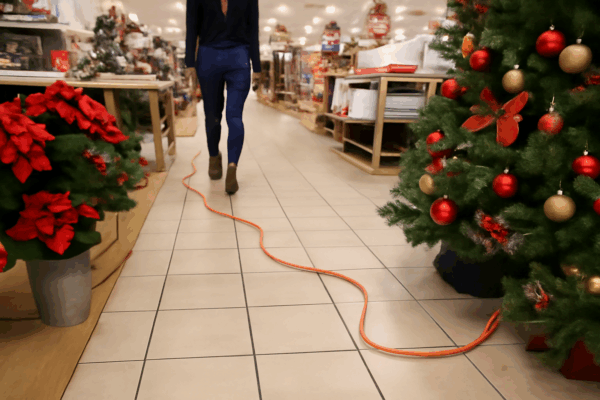
A slip and fall injury occurs when a person slips, trips, or falls because of a dangerous condition or hazard on someone else’s property. In retail settings, this is a common cause of accidents, especially during busy seasons like the holidays, when stores are full of customers and displays.
Holiday decorations, lights, and seasonal displays can make stores look festive and inviting. But these very decorations can pose a serious safety risk if they’re poorly placed or not maintained properly. Add in the fact that stores may become crowded, leading to increased traffic near displays or tight walking spaces, and the likelihood of an accident increases significantly.
When it comes to holiday displays, the danger lies in the potential for cords to get tangled or displays to block walkways. Many stores use decorative lights, large displays, and promotional signage during the holiday season. These setups can obstruct the flow of foot traffic, and if a customer trips over a misplaced cord or a poorly secured display, they could easily fall and sustain serious injuries. It’s important to understand your legal rights if you find yourself in this situation.
Attorney At Law Attorney At Law Attorney At Law
Adam Princenthal

David May

Matthew Wilson
What Are the Legal Elements of a Slip and Fall Case?
In order to prove that a store was negligent in your slip and fall case, you must demonstrate certain elements. Understanding these elements will help you establish the foundation of your claim. The key elements that must be proven in a Georgia slip and fall case include:
1. Duty of Care
Every business has a duty of care to its customers. Store owners are required to provide a safe shopping environment and take steps to prevent accidents. This includes keeping walkways clear of obstacles, ensuring that displays are secure, and addressing any hazards that could cause harm.
For example, if a store sets up a large holiday display, it must be arranged in a way that doesn’t block walkways or create tripping hazards. If cords are used to power lights or displays, they should be securely fastened to prevent customers from tripping. In the case of your injury, the store had a duty to ensure that the area where you were walking was free from any risks.
2. Knowledge or Notice of the Hazard
To prove negligence, you must also show that the store knew or should have known about the dangerous condition that caused your fall. In Georgia, if a hazardous condition exists on the store premises, the owner is generally expected to have reasonable knowledge of it and either fix the problem or warn customers about it.
For instance, if a cord was left in a walkway for hours before the accident happened, you could argue that the store had ample time to address the situation but failed to do so. If the store had a history of similar issues with displays or cords, that could also demonstrate the store’s knowledge of the hazard.
After a car accident, I contacted David May at the Lagrange office. He, and his staff, helped me with medical advice and follow up doctors visits, along with dealing with my insurance and the insurance of the woman that hit me. I have been very pleased with the service I received from David May and the Lagrange staff. They are warm and open, always there to help with advice and answer questions.” - Debau I highly recommend Adam Princenthal .I was looking for someone with years of experience in personal injury.They needed to be knowledgeable, transparent and honest.I wanted to know I was dealing directly with the lawyer I hired.Adam Princenthal could answer all the difficult questions and phone calls were returned.Adam got the settlement I was looking for in a timely manner." - Nancy K. I am glad that I was referred to Princenthal & May. Matthew met with me and gained my trust with the case. I was never left in the dark on any matters, My phone calls were either answered or returned quickly. The office staff are very friendly as well. My case was settled, with both Matthew and Adam present. Both are very professional in their work.. They work for you !!!" - Jacque Minor
3. Causation of the Accident
The next element is establishing a direct connection between the hazard and the accident. You must demonstrate that the dangerous condition—whether it’s a tangled cord or a misplaced display—was the actual cause of your fall.
This can be more complicated when there are multiple factors at play. For example, if the store was crowded and you were jostled by other customers, it may be harder to prove that the store’s negligence caused your fall. This is why it’s important to gather all available evidence, such as witness statements and photographs, to help establish the connection between the hazard and your injury.
4. The Store’s Negligence Led to Your Injury
Finally, you must show that the store’s failure to address the dangerous condition directly caused your injury. If a display was set up improperly, cords were left hanging, or there was insufficient lighting, the store’s failure to address these issues could be considered negligent. Your injury must be a result of that negligence.
For example, if you tripped over a cord that was left hanging in an aisle and fell, the store could be held responsible for not securing the cord properly. On the other hand, if you tripped over a cord that was clearly marked and you failed to notice it, the store may argue that it was not negligent.
Hiring a Personal Injury Attorney How Long Will a Personal Injury Case Take?Related Videos
Key Steps to Take After a Slip or Trip Injury in Georgia
If you’ve been injured in a store due to a holiday display or cord, there are specific steps you should take to protect your health and your legal rights:
1. Seek Medical Attention Immediately
Regardless of how minor the injury seems, it’s important to seek medical treatment right away. Some injuries, like concussions or whiplash, may not show symptoms immediately but could lead to long-term problems if left untreated. A medical report will also document your injuries, which is crucial evidence for your case.
If you wait too long to seek medical care, the store may argue that your injuries were not serious or that they occurred from another cause.
2. Report the Incident to the Store
After the accident, immediately notify the store management of the incident. Request that an official report be filed and make sure to obtain a copy. If the store refuses to create a report, write down the details of the accident, including the date, time, and location, and note any witnesses who may have seen the accident.
Store management may be reluctant to acknowledge their liability, so it’s important to document everything as thoroughly as possible.
Representative Cases
3. Collect Evidence
Evidence is essential to prove your case. Take photographs of the accident scene, including the display, cords, and any other conditions that contributed to your fall. Be sure to capture wide-angle shots of the area to provide context, as well as close-ups of the specific hazard you tripped over.
Also, gather witness statements if anyone saw the accident happen. Witnesses can support your version of events and help establish that the store was negligent.
4. Keep Records of Your Medical Treatment
From doctor visits to prescriptions and physical therapy, all medical treatment you receive should be documented. These records will demonstrate the extent of your injuries and show how the fall impacted your life. In many cases, medical costs make up a significant portion of the damages in slip and fall cases, so it’s important to keep track of every bill and payment related to your treatment.
How a Lawyer Can Help Your Slip and Fall Case
Navigating the complexities of a slip and fall case can be overwhelming, especially when dealing with an injury and the aftermath. Hiring an experienced personal injury lawyer can help you build a strong case and negotiate with the store’s insurance company to get the compensation you deserve.
At Princenthal, May & Wilson LLC, our personal injury attorneys are experienced in handling slip and fall cases throughout Georgia. We’ll help you gather evidence, understand your rights, and take the necessary steps to pursue your claim.
With our guidance, you can focus on healing while we focus on securing compensation for your medical bills, lost wages, and pain and suffering.
Slipping or tripping due to holiday displays or cords can be more than just an inconvenience—it can lead to serious injuries. If you’ve been injured due to a hazardous condition in a store, remember that you have rights. The store has a responsibility to provide a safe environment, and if they fail to do so, you may be entitled to compensation.
By following the steps outlined above and working with an experienced attorney, you can take the necessary actions to protect your health and your legal rights. Contact Princenthal, May & Wilson LLC today for a free consultation to discuss your case.
Disclaimer: This article is for informational purposes only and is not legal advice. Consult an attorney about your specific situation.
To learn more about this subject click here: Top Mistakes People Make After a Slip and Fall in Georgia Restaurants