
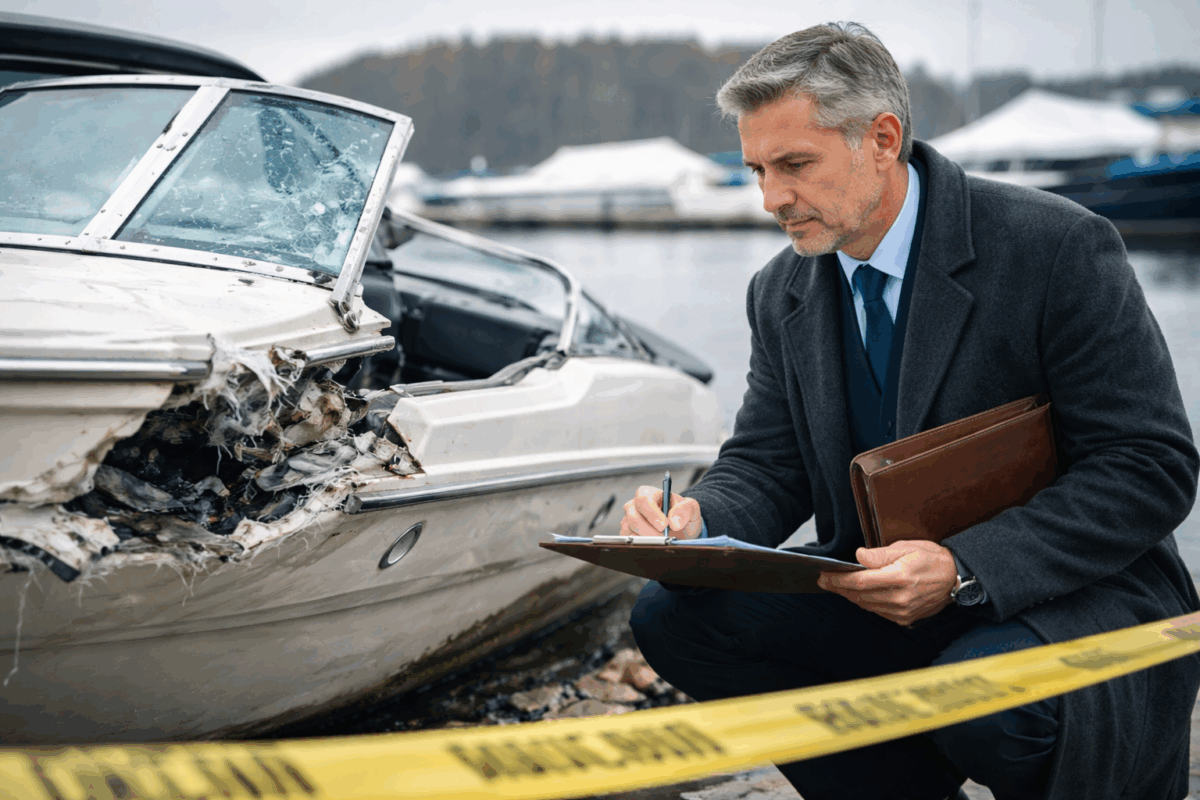
Boating accidents, while more common in the warmer months, can happen at any time. The impact of a boat accident can be severe, leading to injuries ranging from minor to life-threatening. While boating injuries increase during summer, personal injury lawyers know that investigations don’t stop when the temperature drops. They stay vigilant, ensuring they uncover the truth behind every accident, regardless of the season.




Understanding the unique aspects of investigating boat accidents is crucial for those seeking justice. Unlike car accidents, where evidence can often be collected quickly and easily, boat accident investigations have their own set of challenges, especially when they occur during the off-season. In this detailed breakdown, we’ll explore how personal injury lawyers handle boat accident cases and continue their thorough investigations even when the boating activity slows down.
Unique Challenges in Investigating Boat Accidents 
Investigating a boat accident requires specialized knowledge and skills. Unlike a car accident where crash scenes are more accessible, boating accidents often occur on expansive bodies of water where key evidence might drift or be hard to reach. This is why personal injury lawyers and their teams use a variety of methods to gather information that can support the case.
The off-season presents additional difficulties, with many boats stored and out of use during the colder months. However, this doesn’t stop personal injury lawyers from ensuring every possible detail is investigated. The key to success in these cases lies in the ability to be creative and resourceful, working with experts and utilizing every available piece of evidence to build a strong case.
Collecting Evidence from the Scene of the Accident
In the immediate aftermath of a boat accident, gathering evidence is one of the most crucial steps. Personal injury lawyers rely on various methods to obtain information that can clarify the cause of the accident. Even during the off-season, when fewer boats are in use, lawyers have strategies to collect evidence effectively.
Attorney At Law Attorney At Law Attorney At Law
Adam Princenthal

David May
Matthew Wilson
- Boat Inspection: After an accident, the boat involved must be thoroughly inspected. Lawyers often work with maritime experts and engineers to examine the boat for mechanical failures or deficiencies that might have contributed to the accident. For example, a malfunctioning engine, steering problems, or defective safety equipment could be crucial pieces of evidence. During the off-season, these inspections may not happen immediately after the accident, but lawyers will ensure that the boat is thoroughly examined when it’s available.
- Weather Conditions and Water Conditions: Boating accidents can be caused by environmental factors such as sudden weather changes, fog, or rough water conditions. Lawyers gather weather data from the time of the accident and assess how those conditions may have contributed to the incident. Even in the off-season, weather reports can offer vital insights into the accident’s circumstances, such as if fog or ice made boating dangerous at the time of the incident.
- Accident Reports: If local authorities were involved in responding to the accident, they likely created an accident report. These reports are an essential resource in understanding the circumstances of the crash. Personal injury lawyers obtain these reports to assess how the authorities have described the event and identify any overlooked details. They may also reach out to law enforcement for further investigation if needed.
After a car accident, I contacted David May at the Lagrange office. He, and his staff, helped me with medical advice and follow up doctors visits, along with dealing with my insurance and the insurance of the woman that hit me. I have been very pleased with the service I received from David May and the Lagrange staff. They are warm and open, always there to help with advice and answer questions.” - Debau I highly recommend Adam Princenthal .I was looking for someone with years of experience in personal injury.They needed to be knowledgeable, transparent and honest.I wanted to know I was dealing directly with the lawyer I hired.Adam Princenthal could answer all the difficult questions and phone calls were returned.Adam got the settlement I was looking for in a timely manner." - Nancy K. I am glad that I was referred to Princenthal & May. Matthew met with me and gained my trust with the case. I was never left in the dark on any matters, My phone calls were either answered or returned quickly. The office staff are very friendly as well. My case was settled, with both Matthew and Adam present. Both are very professional in their work.. They work for you !!!" - Jacque Minor
Interviewing Witnesses and Boat Operators
Witness testimony can be pivotal in any accident investigation. However, locating witnesses in boating accidents can be challenging, especially when the accident occurs in a remote area or during the off-season when fewer boats are active. Personal injury lawyers work diligently to track down any available witnesses and obtain statements that could reveal vital information.
- Eyewitnesses: Even if the accident occurred far from shore, there may be people who witnessed the event, including people aboard other nearby boats or individuals who were onshore at the time. Lawyers will interview anyone who might have seen the accident unfold. They might even track down passersby who could have seen the boat moments before the crash. This is crucial for understanding what happened from different perspectives.
- Boat Operators: The boat’s operator will likely be a key player in the investigation. Lawyers will interview them to understand their actions leading up to the accident. If the operator was intoxicated, inexperienced, or violating any safety regulations, this information is essential. During the off-season, personal injury lawyers may also look into the operator’s history with boating, including prior accidents, violations, or any issues with boat maintenance.
Hiring a Personal Injury Attorney How Long Will a Personal Injury Case Take?Related Videos
Consulting Maritime Experts
Unlike car accidents, boating incidents often require expertise in marine law, engineering, and navigation. In the off-season, personal injury lawyers continue to consult maritime experts who can provide insight into the causes of the accident, the safety of the vessel, and whether the accident could have been avoided.
- Maritime Engineers: These professionals can assess whether a mechanical failure, such as faulty equipment or a boat malfunction, contributed to the accident. They examine the boat for defects that may not be visible at first glance, providing a technical analysis of the boat’s condition before and after the incident.
- Navigation Experts: Accidents on the water are sometimes caused by poor navigation, and lawyers may consult experts who specialize in waterway regulations, safe boating practices, and accident reconstruction. Even in the off-season, these experts can analyze past accidents in the area, maritime safety records, and regulations to provide clarity in the investigation.
Dealing with Insurance Companies and Liability
A crucial part of any boat accident investigation is determining liability. Insurance plays a significant role in helping victims recover damages for their injuries, but insurance companies often try to minimize their payouts. Lawyers will examine the boat owner’s insurance policy, the coverage on the vessel, and any applicable maritime liability laws.
- Insurance Policies: Boat owners are typically required to carry insurance, but the specifics of the policy will determine what compensation victims are entitled to. Lawyers carefully review these documents to assess what types of damages the insurer will cover. They may also consult the insurance company to negotiate a fair settlement for the victims. Even in the off-season, when boat usage is lower, lawyers keep track of ongoing cases involving boat insurance companies.
- Liability Issues: The question of who is responsible for the accident can be complex. Whether the accident was caused by another boater, a manufacturer’s defect, or poor maintenance, the lawyer will seek to establish fault. In some cases, there may be multiple parties at fault, including the manufacturer, the boat operator, or even the marina. Lawyers use their findings from the accident scene, expert consultations, and witness statements to identify who is liable and pursue the maximum compensation.
Preparing for Trial or Settlement
Once the evidence is gathered, the next step in the investigation is determining whether the case will go to trial or if a settlement is possible. Personal injury lawyers often prefer to settle cases out of court, but they are always prepared to take the case to trial if necessary.
- Damages Assessment: Boat accidents often result in significant medical expenses, lost wages, pain and suffering, and long-term rehabilitation. Lawyers work with financial experts to calculate the full extent of the damages, including the cost of future medical care if the injury is permanent. This ensures that victims receive fair compensation for their injuries.
- Negotiation and Settlement: During settlement negotiations, lawyers leverage their understanding of the case and their client’s needs to reach a fair outcome. Even during the off-season, lawyers continue to negotiate with insurance companies, boat manufacturers, or other responsible parties to settle the case on behalf of their clients.
- Trial Preparation: If a fair settlement cannot be reached, personal injury lawyers are ready to take the case to court. They prepare a strong case using all the evidence gathered during the investigation, including expert testimony and witness statements. Trials for boat accidents can be complex, but personal injury lawyers are well-equipped to handle the legal intricacies involved.
Boat accidents are serious and can have life-altering consequences for victims. The investigation process is crucial to determining who is at fault and securing compensation. Even in the off-season, personal injury lawyers remain committed to uncovering the truth behind every boating accident. By utilizing expert witnesses, gathering crucial evidence, and negotiating with insurance companies, they ensure that victims receive the justice they deserve.
If you or a loved one has been involved in a boat accident, reach out to Princenthal, May & Wilson LLC for a free consultation. Our team of experienced attorneys is dedicated to investigating your case thoroughly, no matter the season, and helping you secure the compensation you deserve.